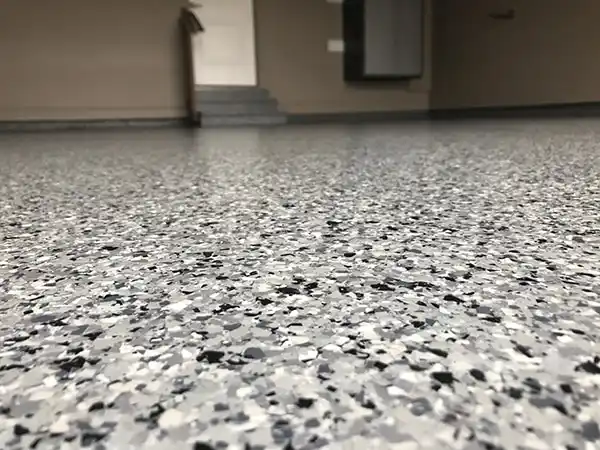


Quick Answer: Yes, flake flooring over concrete is possible when the existing slab is in good condition and properly prepared. The concrete should be structurally sound, clean, dry, and free of contaminants that could interfere with adhesion.
If your existing concrete floor looks worn, stained, or outdated, you may not need to replace the entire slab to give it a fresh appearance. A professionally installed flake flooring system can transform an ordinary concrete surface into a durable and attractive finished floor. But can flake flooring be installed over existing concrete without removing the slab?
In most cases, yes. The key is not the age of the concrete but its condition and preparation. Before installing a new coating, the surface needs to be evaluated and prepared so the system can bond properly. Understanding what your existing floor needs before applying epoxy flake flooring over concrete can help you avoid premature peeling, bubbling, or other coating problems. Let’s dive into it!
What Condition Should Existing Concrete Be In for Flake Flooring?
Installing flake flooring on concrete is a common way to upgrade garages, basements, workshops, and other concrete spaces. The existing slab serves as the foundation for the coating system, eliminating the need to remove otherwise usable concrete.
However, flake flooring should not simply be applied over an untreated surface. Here are several conditions that professionals look for before installing polyaspartic flake flooring over concrete:
1. Structurally Sound Surface
The concrete should be stable and free from serious deterioration. Large cracks, crumbling areas, loose concrete, or significant surface damage may need repairs before coating. Applying a new finish over an unstable substrate can only hide the problem temporarily.
2. Clean and Contaminant-Free
Oil, grease, dirt, dust, chemicals, and other contaminants can prevent the coating from bonding effectively. Thorough cleaning is therefore an essential part of preparing the slab. In garages, particular attention may be needed around areas where vehicles have leaked automotive fluids.
3. Adequate Moisture Conditions
Moisture can create problems beneath a coating if it is not properly addressed. Excess moisture or vapor transmission may contribute to bubbling, blistering, or adhesion failure. Depending on the project, moisture testing may be suggested before flake floor coating installation.
4. Proper Surface Profile
Concrete needs an appropriate surface profile for the coating to mechanically bond with the slab. Professional installers may use diamond grinding or other mechanical preparation techniques to remove weak surface material and create the required texture.
How Can Flake Flooring Be Installed Over Existing Concrete: Step-by-Step Guide
Before the decorative flake flooring installation, the existing concrete must be properly prepared, and then the coating system applied in the right sequence. Each stage plays a role in creating a smooth, durable finish that can stand up to everyday use. Here’s what the professional flake flooring installation process typically involves:
Step 1: Apply the Base Coat
The base coat forms the foundation of the flooring system. It is applied evenly across the prepared concrete to create a suitable surface for the decorative flakes. The selected coating system may vary depending on the project, environment, and performance requirements.
Step 2: Broadcast the Decorative Flakes
While the base coat is still ready to receive the flakes, decorative vinyl flakes are broadcast across the surface. The flakes add visual texture and can be selected in different colors and blends to create a customized appearance.
Step 3: Remove Excess Flakes
After the base coat has cured sufficiently, loose or excess flakes are removed from the surface. This step creates a more consistent finish and prepares the floor for the protective topcoat.
Step 4: Apply the Protective Topcoat
The topcoat seals the decorative flakes and adds another layer of protection. Depending on the system selected, it can help the floor withstand everyday foot traffic, vehicle use, stains, abrasion, and other common sources of wear.
Step 5: Allow Proper Curing
The floor needs adequate curing time before it is exposed to normal traffic. Cure times vary by product and conditions, so it is important to follow the coating manufacturer’s requirements. Returning to the floor too soon can interfere with the system’s final performance.
Because of its durability and resistance to everyday wear, flake flooring is also popular for garage upgrades. It is an excellent choice for garage floor coating over old concrete, especially when the existing slab is properly prepared. Our guide on garage flake flooring installation explains why this flooring system is a durable upgrade for garage spaces.
How to Maintain a Flake Floor After Installation?
A little routine care can go a long way in keeping your flake floor looking clean and well-maintained. Although flake flooring is made to handle everyday wear, simple maintenance helps preserve its appearance and protective finish over time.
- Sweep or dust-mop regularly: Remove dirt, dust, sand, and grit before they accumulate and potentially wear down the surface.
- Clean spills promptly: Wipe up oil, chemicals, food, and other spills as soon as possible to help prevent staining or surface damage.
- Use appropriate cleaning products: Choose mild, coating-safe cleaners recommended for your specific flooring system. Avoid products that can leave a residue or affect the finish.
- Avoid abrasive tools and harsh chemicals: Steel wool, abrasive pads, and unsuitable chemicals can scratch or dull the protective topcoat.
- Follow the manufacturer’s recommendations: Different epoxy and polyaspartic systems may have specific cleaning and maintenance requirements, so follow the product guidelines for the best results.
- Address damage or worn areas promptly: If you notice chips, peeling, cracks, or unusual wear, have the area evaluated rather than allowing the problem to worsen.

Give Your Existing Concrete a Durable New Finish with Professional Flake Flooring!
So, can flake flooring be installed over existing concrete? For property owners looking to upgrade a worn or outdated floor, installing flake flooring over concrete can be an effective way to refresh an existing floor without replacing a sound concrete slab. When the concrete is properly evaluated, prepared, coated, and cured, flake flooring can create an attractive, durable surface that is easier to maintain and built for everyday use.
At Xecutive Epoxy Coatings Specialist, our expert team provides professional epoxy flooring services with a focus on detailed surface preparation and quality installation. We use specialized equipment for concrete surface preparation, moisture-blocking primers, industrial-grade epoxy and polyaspartic systems, and protective finishes to deliver a reliable flooring system.
Ready to transform your existing concrete? Get a free quote today and turn your concrete floor into a durable and attractive surface with professional flake flooring!
FAQs
1. Can mold grow under epoxy flooring on concrete?
Mold does not simply grow because epoxy flooring is installed over concrete. However, moisture trapped beneath a coating can create conditions that contribute to mold or other moisture-related problems. Proper moisture evaluation and substrate preparation are important before installation.
2. Can flake flooring cover cracks in concrete?
Flake flooring can be installed over concrete with certain minor cracks after they have been appropriately repaired. However, significant, moving, or structural cracks should be evaluated and addressed before coating. Applying flooring directly over unresolved cracks can lead to problems with the finished surface.
3. Can flake flooring be installed over painted or previously coated concrete?
It can be possible, but the existing coating needs to be evaluated first. If paint, sealer, or an older coating is loose, peeling, or poorly bonded, it may need to be removed before the new system is installed. Proper preparation is essential for reliable adhesion.
4. How do you prepare old concrete for flake flooring?
Concrete floor preparation for flake flooring generally involves inspecting the slab, removing dirt and contaminants, mechanically profiling the surface, repairing cracks and damaged areas ce vvnhat, and addressing moisture concerns.
5. What is the average cost of epoxy coating a concrete floor?
The cost varies significantly based on floor size, concrete condition, preparation requirements, coating system, number of layers, flake coverage, and any necessary repairs. An on-site assessment is generally the best way to determine the actual requirements and get an accurate project estimate.