



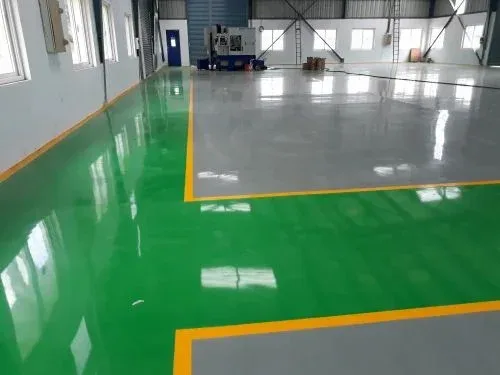
Industrial environments demand flooring that can handle constant foot traffic, heavy machinery, spills, and harsh operating conditions without compromising employee safety. Industrial epoxy flooring improves workplace safety by creating durable, slip-resistant, and easy-to-maintain surfaces for factories, warehouses, and production facilities.
Damaged or slippery floors often lead to workplace accidents, production delays, and expensive maintenance issues. Industrial epoxy flooring offers a durable and reliable solution designed to improve safety while supporting operational efficiency. Its seamless surface, chemical resistance, and long-lasting performance make it ideal for warehouses, factories, and manufacturing facilities.
In this blog, we will learn how epoxy flooring supports heavy industry activities and how to choose the right professionals for durable and high-quality flooring systems tailored to your facility’s needs!
What Is Industrial Epoxy Flooring?
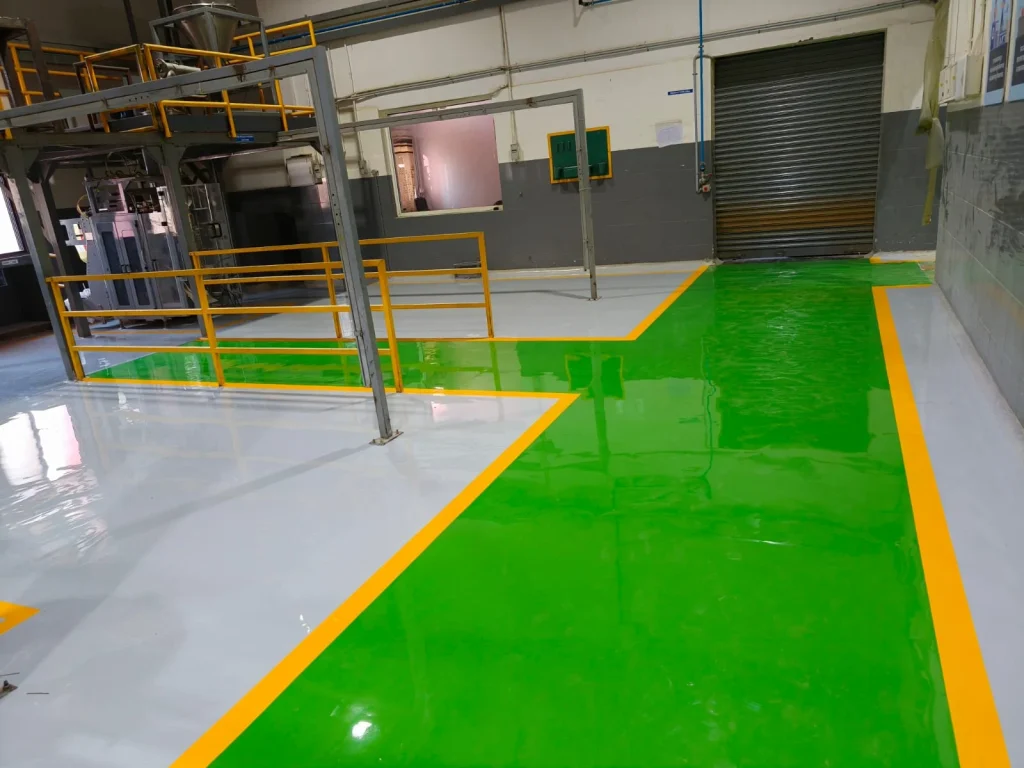
Industrial epoxy flooring is a protective resin-based coating applied over concrete floors to create a seamless, durable, and high-performance surface.
It is widely used in factories, warehouses, and production facilities because of its resistance to chemicals, moisture, abrasion, and heavy loads. An industrial epoxy floor coating also improves floor appearance while supporting safer and more efficient industrial operations.
Industrial epoxy flooring improves workplace safety by creating seamless surfaces that reduce hazards in factories, warehouses, and production facilities.
7 Ways Industrial Epoxy Flooring Improves Workplace Safety
An industrial flooring system directly affects how safely employees can move, work, and operate equipment within a facility. From reducing slips to improving visibility, epoxy floors provide multiple advantages that support safer industrial operations. Below are some of the most important safety benefits of epoxy flooring for warehouses, factories, and manufacturing environments.
1. Reduces Slips, Trips, and Falls
Slip-related accidents are among the most common workplace injuries in industrial settings. Slip-resistant epoxy flooring improves traction by adding textured finishes that reduce surface slipperiness, even in wet or high-traffic areas.
It helps employees move safely around machinery, loading zones, and production lines while lowering the risk of costly workplace accidents.
2. Improves Resistance to Chemical Spills
Factories and industrial facilities regularly handle oils, solvents, and harsh chemicals that can damage traditional concrete floors. Epoxy coatings create a non-porous protective layer that resists chemical penetration and makes spills easier to clean.
It improves safety flooring for factories by helping maintain cleaner work areas and reducing employee exposure to hazardous substances.
3. Creates Safer Walkways with Floor Markings
Epoxy flooring allows businesses to add clear floor markings for pedestrian paths, loading zones, hazardous areas, and equipment storage. The markings improve workplace organization and guide employee movement throughout the facility.
Well-defined walkways also reduce confusion in busy environments, making industrial floor safety solutions more effective for daily operations.
4. Minimizes Dust and Airborne Contaminants
Unsealed concrete floors often release dust particles into the air, affecting cleanliness and indoor air quality. Epoxy flooring seals the concrete surface and reduces dust accumulation across industrial facilities.
Additionally, cleaner environments support healthier working conditions, especially in manufacturing plants, food processing units, and warehouses, where hygiene standards are important.
Industrial epoxy flooring improves workplace safety by minimizing dust buildup and improving overall cleanliness in industrial facilities.
5. Enhances Visibility in Industrial Facilities
Bright and reflective epoxy surfaces improve lighting efficiency within factories and warehouses. Better visibility helps employees identify hazards, navigate workspaces safely, and operate machinery more accurately.
As a result, Warehouse epoxy flooring safety improves further when reflective coatings are combined with clear aisle markings and designated operational zones throughout the facility.
6. Prevents Cracks and Uneven Surfaces
Cracked or uneven floors can lead to trips, falls, and equipment instability. Epoxy flooring strengthens concrete surfaces and protects them from wear caused by heavy machinery and daily traffic.
By maintaining a smooth and durable finish, businesses can reduce maintenance issues and create safer working conditions for employees and operational equipment.
7. Supports Fire and Heat Resistance
Certain epoxy flooring systems are designed to tolerate high temperatures and resist fire-related damage. These coatings help protect industrial surfaces in facilities exposed to heat-generating machinery or welding operations.
Anti-slip epoxy flooring with heat-resistant properties also improves employee safety by maintaining floor stability in demanding industrial environments.
Industries That Benefit Most from Industrial Epoxy Flooring
Industrial epoxy flooring is commonly used as industrial safety flooring across a wide range of industries that require durable and low-maintenance surfaces. These flooring systems help improve operational safety, cleanliness, and long-term performance in demanding environments.
Industries that commonly benefit from industrial flooring systems include:
- Warehouses and distribution centers
- Manufacturing plants
- Automotive facilities
- Food processing plants
- Chemical facilities
- Pharmaceutical production units
- Logistics and shipping facilities
Furthermore, industrial epoxy flooring improves workplace safety by supporting cleaner, more organized, and slip-resistant industrial environments.
How to Choose the Right Industrial Epoxy Flooring System
Selecting the right flooring system depends on the specific conditions within your industrial facility. Different industries require different levels of durability, slip resistance, and chemical protection. Choosing the correct flooring solution ensures long-term performance, lower maintenance requirements, and better protection for employees and equipment. Additionally, industrial epoxy flooring improves workplace safety while supporting durability and operational efficiency in demanding industrial environments.
- Evaluate the level of foot traffic and machinery movement within the facility.
- Choose coatings with chemical and abrasion resistance for demanding environments.
- Select textured finishes for improved slip protection in wet areas.
- Consider heat-resistant coatings for high-temperature operations.
- Use color-coded floor markings to improve organization and navigation.
- Work with experienced installers who understand industrial flooring requirements.
- Prioritize long-term durability and maintenance efficiency over short-term cost savings.
The Right Professionals for Industrial Epoxy Flooring
Industrial epoxy flooring improves workplace safety by reducing common hazards in factories, warehouses, and production facilities. The flooring systems create durable, slip-resistant, and easy-to-maintain surfaces that support safer daily operations. From chemical resistance to improved visibility, epoxy flooring helps businesses maintain cleaner, stronger, and more organized industrial environments while reducing long-term maintenance concerns.
Businesses continue investing in epoxy systems because industrial epoxy flooring improves workplace safety while supporting long-term durability and operational efficiency.
At Xecutive Epoxy Coatings Specialist, we provide high-quality epoxy flooring solutions designed for demanding industrial environments. We help businesses improve safety, durability, and operational efficiency with professionally installed flooring systems tailored to their facility requirements. Whether you manage a warehouse, factory, or production plant, our team delivers reliable epoxy flooring solutions built for long-term performance.
Reach out to us for durable industrial epoxy flooring!
FAQs About How Industrial Epoxy Flooring Improves Workplace Safety
-
Is industrial epoxy flooring slip-resistant?
Yes, industrial epoxy flooring can be designed with textured or anti-slip finishes that increase traction in wet and high-traffic areas, helping reduce slips and falls in industrial facilities. They help reduce slips, trips, and falls in industrial facilities. The level of slip resistance can also be customized based on workplace conditions and operational requirements.
-
How long does industrial epoxy flooring last?
Industrial epoxy flooring can last between 10 and 20 years, depending on traffic levels, maintenance, and environmental conditions. Proper installation and routine cleaning significantly improve durability. Facilities with heavy machinery or constant movement may require periodic maintenance, but epoxy floors generally offer long-term performance and cost efficiency.
-
Can epoxy flooring handle heavy machinery?
Yes, epoxy flooring is designed to withstand heavy machinery, forklift traffic, and industrial equipment loads. Its durable surface resists cracking, abrasion, and impact damage under demanding conditions. This makes epoxy flooring a suitable choice for manufacturing plants, warehouses, automotive facilities, and other heavy-duty industrial environments.
-
Is epoxy flooring safe for chemical plants and warehouses?
Epoxy flooring is widely used in chemical plants and warehouses because it resists spills, moisture, and chemical exposure. Epoxy moisture control system helps maintain cleaner environments and simplifies spill cleanup. Specialized epoxy systems can also be customized to provide additional resistance against harsh industrial chemicals and operational wear.
-
How do you maintain industrial epoxy flooring?
Industrial epoxy flooring requires regular sweeping and mopping to remove dust, dirt, and spills. Immediate cleanup of chemicals or oils helps preserve the coating surface. Periodic inspections and minor repairs also extend the flooring’s lifespan. Compared to traditional concrete, epoxy flooring generally requires less maintenance and supports cleaner industrial operations.

