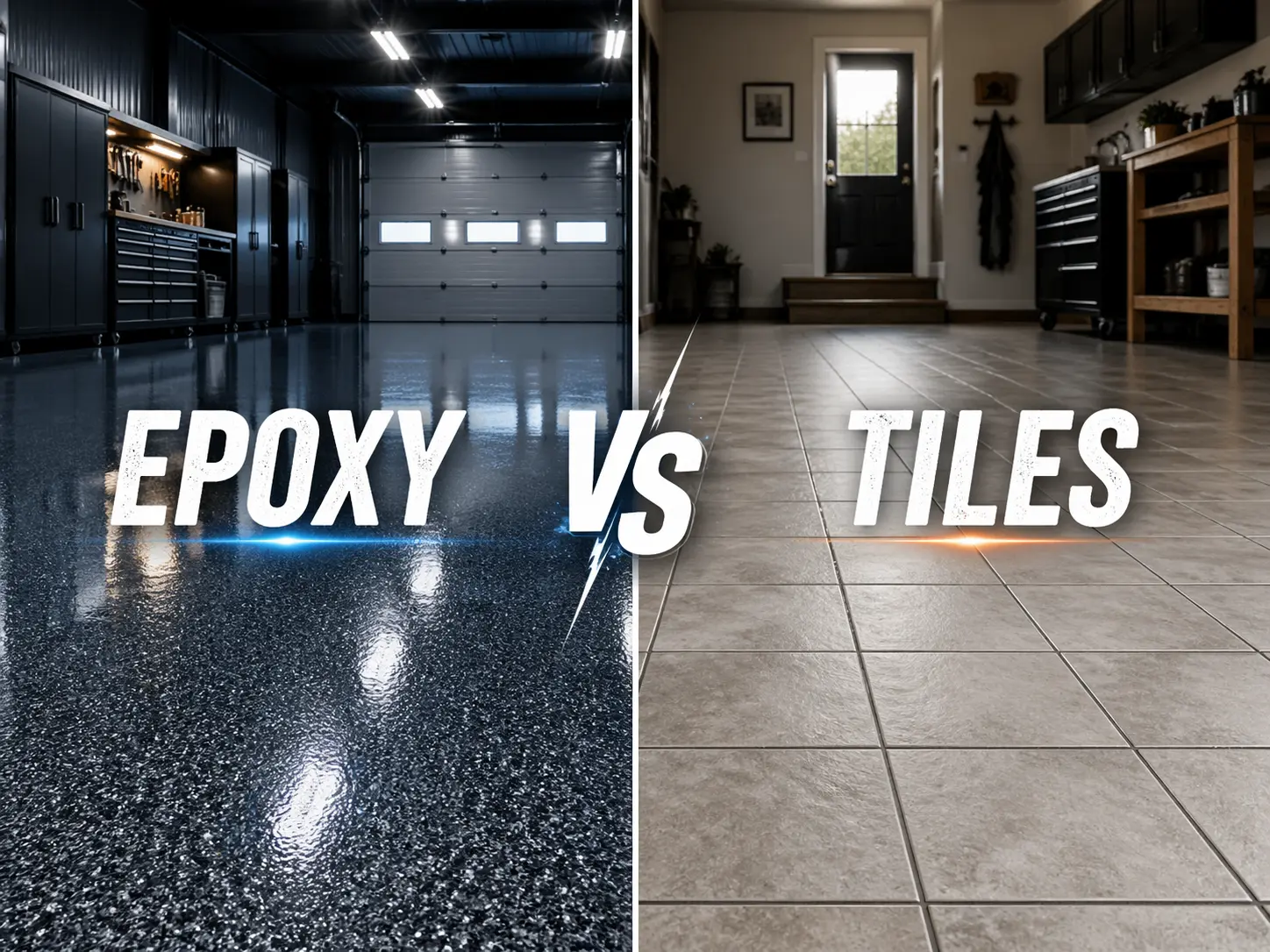


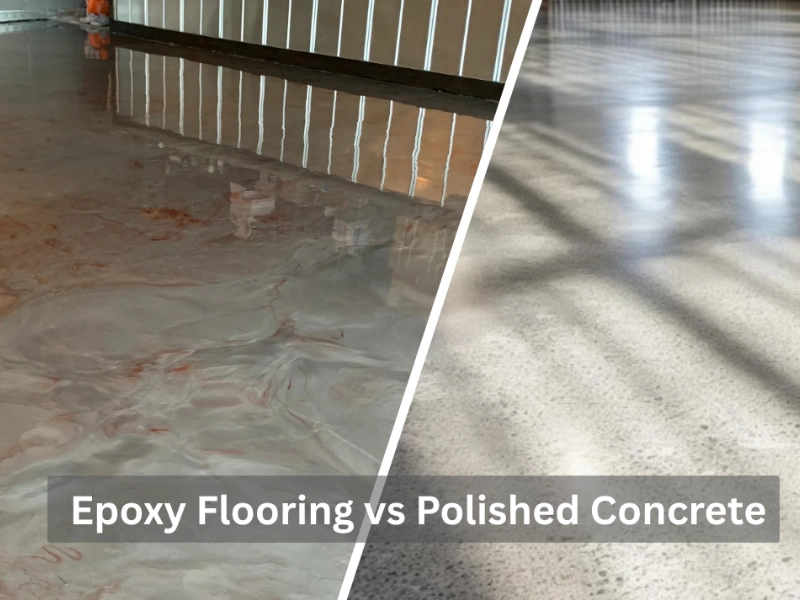
Choosing between epoxy flooring vs polished concrete is a common dilemma for homeowners and business owners planning a durable, modern floor in 2026. Both options offer sleek aesthetics, long-lasting performance, and low maintenance, but they differ in cost, appearance, installation, and best-use scenarios.
Choosing the right one depends on your space, budget, and functional needs. Whether you’re upgrading a garage, warehouse, or living area, understanding the pros and cons of each flooring type can help you make a confident decision.
In this guide, we will break down everything you need to know to select the perfect flooring solution for your project.

What Is Epoxy Flooring? (And How It Works)
Epoxy flooring is a durable surface created by applying a resin and hardener over concrete. When mixed, these components chemically react to form a rigid, plastic-like coating that bonds tightly to the floor. It creates a smooth, glossy, and resistant surface that protects against stains, chemicals, and wear, making it ideal for garages, industries, and commercial spaces.

What Is Polished Concrete? (And How It Works)
On the other hand, polished concrete is a flooring system achieved by mechanically grinding and polishing a concrete surface using specialized tools. The process involves multiple stages of grinding, densifying, and sealing to create a smooth, reflective finish. It enhances the concrete’s strength and durability while delivering a natural, modern look commonly used in homes, offices, and retail spaces.
Key Differences Between Epoxy and Polished Concrete Floors
After understanding how each option works, it’s important to explore the key differences between the two to make the right choice for your space. While both offer durability and modern appeal, they vary in appearance, maintenance, lifespan, and overall performance. Let’s discuss the pros and cons of epoxy flooring vs polished concrete, helping you clearly compare their strengths and limitations before making a final decision.
Epoxy Flooring vs Polished Concrete Cost: What Should You Budget?
When comparing epoxy flooring vs polished concrete cost, epoxy often has a lower upfront price, depending on coating thickness and customization. Epoxy can be cheaper upfront, but polished concrete may offer better long-term value with fewer repairs. Your total budget will vary based on space size, finish quality, and labor requirements.
What it means for you:
- Epoxy suits tighter upfront budgets
- Polished concrete saves long-term costs
- Surface condition affects final pricing
Epoxy vs Polished Concrete Durability: Which Lasts Longer?
Besides costs, when evaluating epoxy coating vs polished concrete lifespan, both are durable but perform differently over time. Epoxy creates a protective layer that can wear or peel under heavy use, while polished concrete strengthens the existing slab itself. With proper care, polished concrete often lasts longer in high-traffic environments.
What it means for you:
- Polished concrete handles heavy traffic better
- Epoxy may need recoating over time
- Usage type impacts lifespan choice
Polished Concrete vs Epoxy Flooring Maintenance
Maintenance needs differ significantly between these two options. Epoxy floors are easy to clean, which is the main benefit of epoxy flooring, but may require occasional reapplication if damaged. Polished concrete requires routine cleaning and periodic resealing to maintain its shine. Both are low-maintenance, but the level of upkeep depends on usage and exposure.
What it means for you:
- Epoxy offers easy daily cleaning
- Polished concrete needs periodic upkeep
- Maintenance depends on traffic levels
Epoxy vs Polished Concrete for Garage Floors
For garages, epoxy flooring is often preferred due to its resistance to oil stains, chemicals, and tire marks. Polished concrete provides a clean and durable surface, but may lack the same level of chemical resistance. Your choice depends on whether you prioritize protection or a more natural finish.
What it means for you:
- Epoxy protects against spills and stains
- Polished concrete gives a subtle look
- Garage usage determines the best fit
Commercial Flooring Epoxy vs Polished Concrete
And lastly, in commercial settings, both flooring types offer durability and visual appeal. Industrial epoxy flooring is ideal for environments needing chemical resistance and safety coatings, while polished concrete is popular for its sleek, professional look and longevity. The right choice depends on business type, foot traffic, and maintenance expectations.
What it means for you:
- Epoxy suits industrial and heavy-duty use
- Polished concrete fits modern commercial spaces
- Consider safety, traffic, and aesthetics
Which Is Better? Epoxy or Polished Concrete? (Our Verdict)
Choosing the best flooring option, epoxy or polished concrete, we always recommend epoxy flooring for those who want maximum performance, protection, and visual impact. While polished concrete offers a clean and natural look, it doesn’t provide the same level of resistance against chemicals, stains, and heavy wear as epoxy does.
From our experience, epoxy flooring delivers better value where durability, safety, and long-term protection matter most, especially in garages, commercial spaces, and industrial environments.
If you’re ready to upgrade your floors, we offer expert epoxy flooring installation at Xecutive Epoxy Coatings Specialist, using premium-grade materials, customized finishes, anti-slip coatings, and a fast turnaround. Our solutions are designed for long-lasting durability, easy maintenance, and superior resistance, backed by skilled professionals and reliable after-service support.
Contact us today for a tailored, high-performance flooring solution.
Frequently Asked Questions
Can You Apply Epoxy Over Polished Concrete?
Yes, but the surface needs proper preparation. Polished concrete is smooth, so it must be mechanically ground to create a rough profile. It helps the epoxy bond properly and prevents peeling or adhesion issues over time.
Which Is More Slippery – Epoxy or Polished Concrete?
Both can be slippery when wet, but epoxy can be customized with anti-slip additives for better grip. Polished concrete tends to be more slippery due to its smooth finish, especially in high-gloss surfaces or moisture-prone areas.
Which Flooring Adds More Value to a Home?
Both add value, but in different ways. Polished concrete appeals to modern, minimalist aesthetics, while epoxy flooring adds practical value through durability and protection, especially in garages or utility areas where performance matters most.
How Long Does Epoxy Flooring Last?
With proper installation and maintenance, epoxy flooring can last 10–20 years or more. Its lifespan depends on usage, traffic, and exposure to chemicals, but periodic maintenance can significantly extend its durability and appearance
Is Epoxy Flooring Worth It for Residential Use?
Absolutely. Epoxy flooring is a great choice for homes, especially in garages, basements, and kitchens. It offers durability, easy cleaning, and a stylish finish, making it a practical and long-lasting investment for residential spaces.