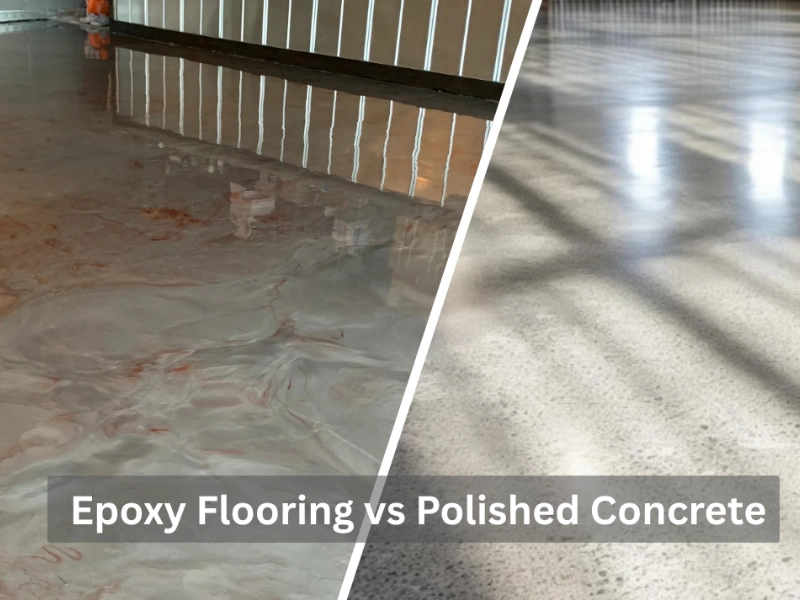


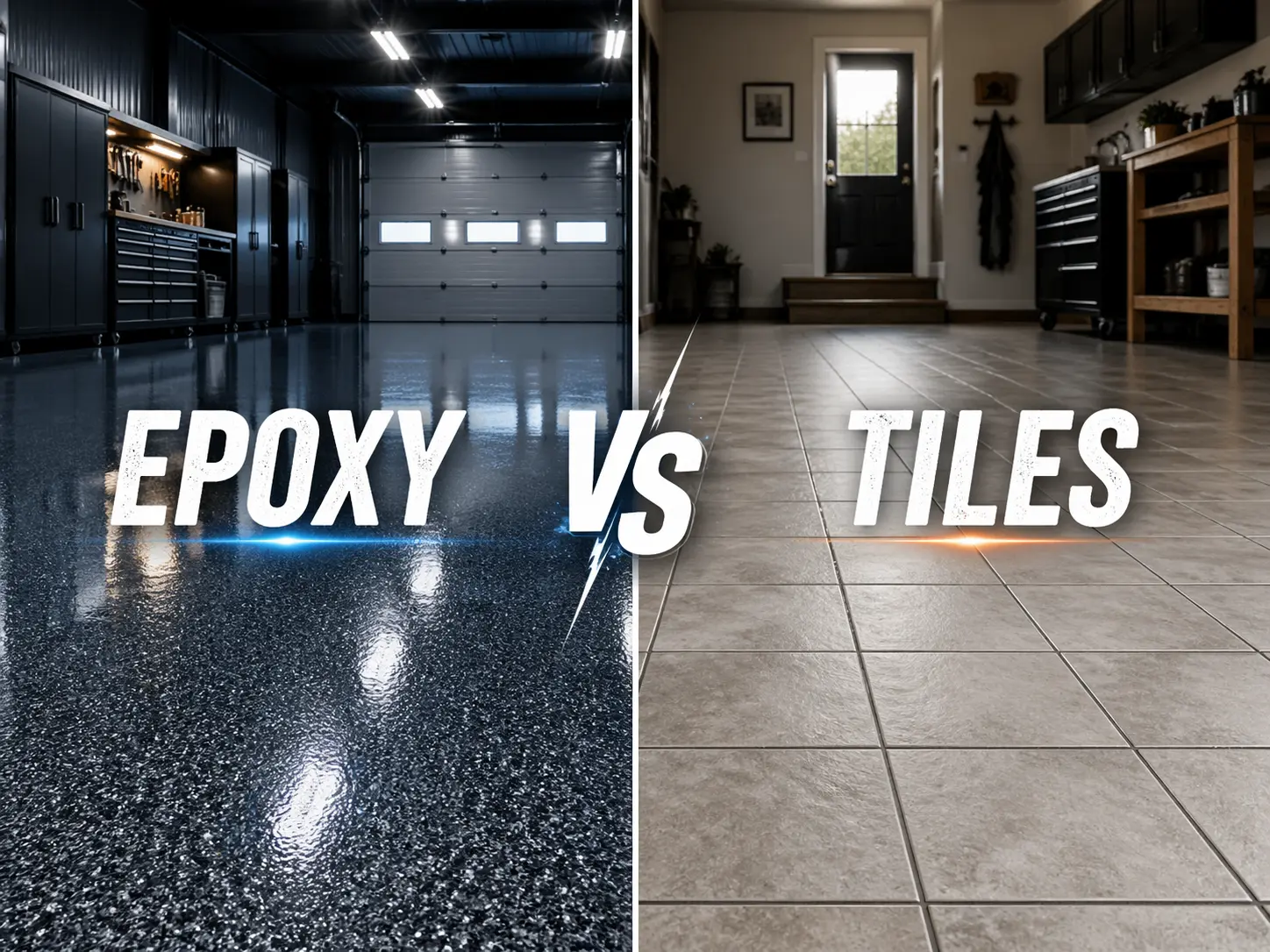
Recently, a business client reached out to our flooring team with a common dilemma: epoxy flooring vs tiles. They wanted clarity on which option would best serve their facility while balancing durability, hygiene, and aesthetics. If you’re comparing epoxy flooring vs tiles, understanding long-term performance and maintenance is crucial before making a decision.
Our experts explained the strengths of both: epoxy’s seamless, chemical-resistant surface (ideal for high-traffic and hygiene-sensitive areas) and tile flooring’s design versatility and easy repairs. The challenge wasn’t which is better, but which fits the specific use case.
Yet, even after reviewing the details, the client still felt confused, because the decision wasn’t about one being “better”, but about which aligned with their specific goals. That moment reinforced why many homeowners and business managers hesitate: the choice carries long-term impact, and both options have respective uses.
To ensure no one remains stuck in uncertainty, our experts have curated this flooring comparison guide. It outlines the comparison into clear, actionable insights so businesses and homes can move forward with decision-making without hesitation.
Epoxy Flooring vs Tiles: Detailed Comparison Guide
Our team of specialists explains that Epoxy flooring is a seamless, industrial‑grade coating useful for durability, chemical resistance, and long‑term savings. In contrast, tile flooring is recognized for its natural slip resistance, decorative variety, and homeowner‑friendly repair options. Both serve different purposes.
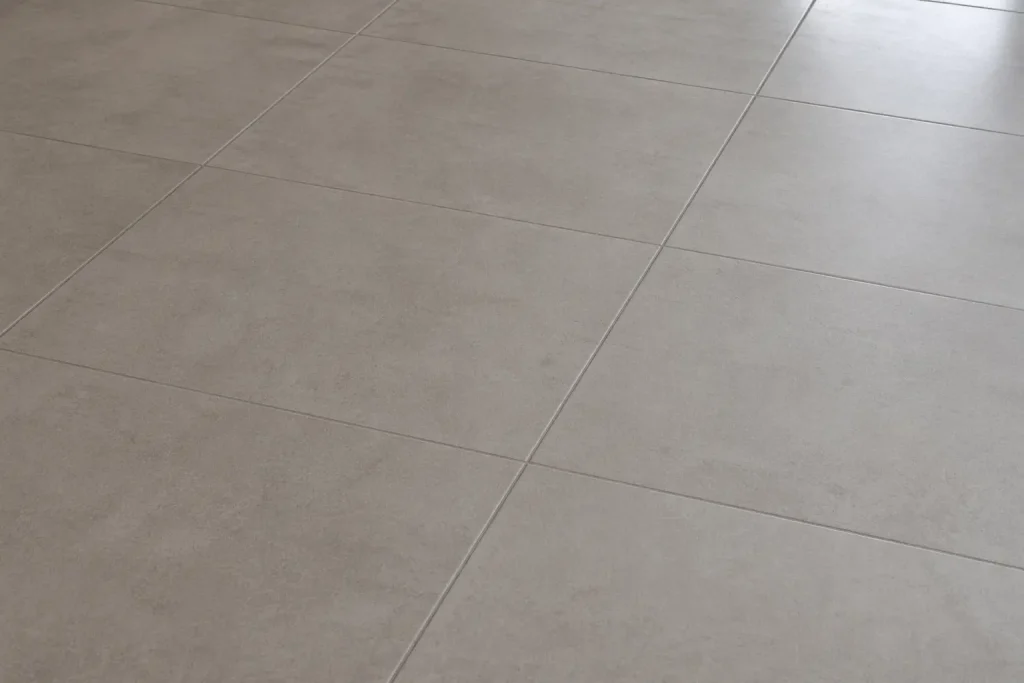
Core Comparison: Epoxy vs Tile Flooring
| Core Factor | Epoxy Flooring | Tiles | Which is Beneficial? |
|---|---|---|---|
| Surface Preparation | Requires expert prepping (diamond grinding, moisture testing). Improper prepping risks failure. | Simpler substrate requirements, less technical. | Tiles for ease; Epoxy when done professionally. |
| Installation Quality Control | Critical, affects the majority of the lifespan. | More forgiving; isolated tile issues don’t compromise the entire floor. | Epoxy with professional teams; Tiles for DIY resilience. |
| Aesthetic Customization | Limitless: metallics, flakes, luxury marble effects. | Limited to tile selection and grout design. | Epoxy for high-end, distinctive looks. |
| Slip Resistance (Safety) | Fully customizable via additives and textures. | Depends on tile type; textured options available. | Epoxy for tailored safety; Tiles for natural slip resistance. |
| Chemical Resistance | Excellent; industrial-grade protection against oils, acids, and cleaners. | Grout is vulnerable to degradation and staining. | Epoxy for large spaces, kitchens, and garages. |
| Repair Ease | Requires full recoat by professionals. | Individual tiles can be replaced easily. | Tiles for homeowner-friendly fixes. |
| Long-Term Maintenance Cost | Low, minimal care is needed after proper installation. | Moderate to high; frequent grout sealing and periodic repairs required. | Epoxy saves money over decades. |
Epoxy Flooring vs Tiles: Which One to Choose for Homes & Businesses?
According to our experts, choosing between epoxy vs tile flooring depends on usage, environment, and priorities. Here’s what our team had to share about how both options play out in real-world environments:
#1. Epoxy Flooring vs Tiles for Homes (Garages & Basements)
For garages and basements, epoxy flooring for garage spaces offers excellent resistance to oil, moisture, and cracks. Its seamless surface prevents mold growth and ensures durability.
Tiles work well in kitchens and bathrooms, but grout requires frequent maintenance.
Here’s what one of our regulars had to say after they got epoxy flooring done by our expert team: “After years of dealing with oil stains and moisture cracks in our garage, we finally contacted Xecutive. The flake epoxy they installed has held up through two Las Vegas summers without a single chip or peel.” – Marie B.
#2. Epoxy Flooring vs Tiles for Businesses (Labs, Warehouses, Healthcare)

A PMC study reveals that epoxy-based flooring systems deliver long-term cost savings due to minimal maintenance and industrial-grade durability. Our ASTM-certified technicians confirm this epoxy flooring vs tiles performance finding, noting that epoxy consistently outperforms tile in heavy-traffic, performance-driven environments. Tiles still fit well in offices and retail areas, where aesthetics and spot repairs matter more.
A regional commercial space facility manager consulted us after repeated grout failures under heavy traffic. We recommended epoxy flooring, and now their space floor is completely transformed, eliminating expensive re-grouting cycles.
#3. Large Facilities( Hospitals, Food Services)
CDC Environmental Infection Control guidelines (section 4.d) recommend seamless, non-porous flooring in clinical areas to prevent microbial harborage, especially in healthcare facilities, and our lead coating specialists, trained in industrial-grade application, agree. Epoxy coating eliminates grout lines, which often allow bacterial growth. Tiles remain a viable option for schools, but mandates require maintenance.
During an ICU renovation at a licensed healthcare facility in Southern Nevada, our team applied a two-coat seamless epoxy system using hospital-grade, disinfectant-resistant materials. The infection control team documented a measurable reduction in surface bacterial counts in post-installation swab testing, compared to the previously tiled sections where grout had collected contaminants despite daily cleaning.
You’ve seen how epoxy and tile can be of help across different spaces. Each environment brings unique priorities, and our professionals have helped clients navigate those preferences with standards-backed solutions.
So if you’re weighing options for your own area, or feel uncertain about which flooring best fits your needs, use the table below to prioritize your requirements based on our expert recommendations.
| Environment | If Priority | Our Experts’ Recommendation | Why It Works |
|---|---|---|---|
| Homes (Garages, Basements, Workshops) | Durability, moisture resistance, and low maintenance | Epoxy Flooring | Seamless protection against oil, chemicals, dampness, and hygiene benefits. Xecutive’s Flake Epoxy Flooring is an ideal option as it’s built for Vegas heat, dust, and heavy garage use. |
| Homes (Kitchens, Bathrooms, Laundry Rooms) | Slip resistance, decorative appeal | Tiles | Textured options improve safety; wide design variety fits residential aesthetics. But if you want luxury aesthetics with durability, our Metallic or 3D Marble Epoxy Flooring can deliver slip-resistant, UV-stable finishes with a high-end look. |
| Businesses (Warehouses, Labs, Manufacturing, Healthcare Facilities) | Heavy traffic, hygiene compliance, and chemical resistance | Epoxy Flooring | Professionals agree epoxy delivers industrial-grade resilience and long-term savings. Our Industrial Epoxy Flooring is engineered for chemical, oil, and heavy foot traffic resistance, meeting ASTM standards. |
| Businesses (Retail, Offices, Showrooms) | Aesthetics, customer-facing design | Tiles | Polished look with versatile patterns; easier spot repairs for high-visibility areas. Alternatively, Metallic Epoxy Flooring by us offers marble-like luxury finishes that impress in showrooms and offices while resisting wear. |
| Specialized Facilities (Food Service, Hospitals, Cleanrooms) | Hygiene, regulatory compliance | Epoxy Flooring | Seamless, non-porous surfaces meet CDC infection prevention guidelines. Xecutive’s Industrial Epoxy Flooring ensures compliance with moisture-blocking primers and hospital-grade disinfectant resistance. |
| Schools / Public Spaces (Classrooms, Restrooms, Libraries) | Cost-effectiveness, ease of repair | Tiles | Budget-friendly and easy to replace; suitable for high-traffic environments. |
| Outdoor & Semi-Outdoor Areas (Patios, Pool Decks, Driveways) | Weather resistance, slip safety | Tiles | Outdoor-rated porcelain tiles resist UV, frost, and water. For confined outdoor garages or shaded driveways, our Flake Epoxy Flooring with UV-stable finishes can be a long-lasting alternative to tiles. |
Final Take on Epoxy Flooring vs Tiles and How We Can Help
As per our team members, industry experts often frame the epoxy flooring vs tiles discussion as a matter of priorities within durable flooring options. Epoxy is known for its seamless, non‑porous finish, lower upfront cost, and hygiene compliance in heavy‑traffic or moisture‑prone areas.
Whereas tiles are praised for decorative variance and extreme longevity, though grout maintenance stays a recurring liability.
The common view is that epoxy delivers performance‑driven value where durability and safety are crucial, while tiles remain the trusted option for dry residential spaces where design and repair flexibility are prioritized.
Together, they represent two proven pathways to durable flooring solutions, each backed by skilled practice and long‑term reliability.
With years of expertise, Xecutive Epoxy Coatings Specialists transforms normal floors into durable, high‑gloss surfaces built to last. Helping Las Vegas and the surrounding areas, our team of professionals delivers luxury metallic marble and decorative flake epoxy floors using proven techniques, ensuring strength, style, and long‑term performance without shortcuts.
You can contact us anytime, share your requirements, and get a precise plan from our expert team to refresh your entire flooring.
FAQs
How many years will an epoxy floor last?
An epoxy floor, when installed with proper surface prep and industrial‑grade materials, usually lasts 10 to 20 years before recoating is needed. In fact, our team of technicians believes that with routine care, the underlying system can protect concrete for 20+ years.
Can you put another coat of epoxy over the old epoxy?
Yes, you can apply a fresh layer of epoxy over an existing one, but only if the old surface is properly cleaned, scraped, and moisture‑tested. In our years of experience, recoating without expert oversight often fails prematurely because of poor adhesion or hidden moisture issues, leading to costly repairs.
Which flooring is cheaper, tiles or epoxy?
Epoxy flooring is cheaper upfront than tiles because it requires fewer materials and less labor. It also offers lower long‑term maintenance costs, making it an eco‑friendly value choice for performance‑driven spaces, in our professional opinion.
Can mold grow under an epoxy floor?
Mold cannot grow under a properly installed epoxy floor because its seamless, non‑porous surface blocks moisture penetration. Based on years of observation, our team notes that it may only happen when prepping or moisture testing is skipped, as a result, the hidden dampness allows mold to grow.