

Hot tire pickup on an epoxy garage floor occurs when warm tires leave rubber residue or, in more serious cases, contribute to the coating lifting from the concrete. It can leave black tire marks, discoloration, or damaged patches that affect the floor’s appearance and durability.
To help prevent hot tire pickup, choose a garage floor coating designed for vehicle traffic, ensure the concrete is properly prepared, and allow the coating to cure fully before parking. Regular cleaning, suitable protective mats, and a compatible topcoat can also help reduce tire-related wear.
The right prevention method depends on the coating system, installation quality, and condition of the concrete. Understanding these factors can help you keep your garage floor looking its best for longer.
What Causes Hot Tire Pickup on Epoxy Floors?
When a vehicle is parked on an epoxy-coated surface, heat and pressure from its tires can leave dark rubber traces or, in more severe cases, cause sections of the finish to separate from the concrete. During driving, tires heat up through friction with the road. As the car settles into its parking spot, its warm tires press against the floor under the vehicle’s weight, potentially weakening the coating’s grip and increasing the chance of peeling.
The problem is more likely when the coating has not fully cured, the concrete was inadequately prepared, or the flooring system is not suited to vehicle traffic. It is also important to distinguish ordinary black tire marks from actual coating failure. Rubber residue may be removable, while peeling or flaking can indicate a more serious adhesion issue.
7 Effective Ways to Prevent Hot Tire Pickup on an Epoxy Garage Floor
Reducing the risk of hot tire pickup on a garage floor depends on selecting suitable coating materials and following the right care practices once installation is complete. These seven practical steps will help you reduce tire-related wear, protect the coating from premature damage, and keep your garage floor looking great for longer.
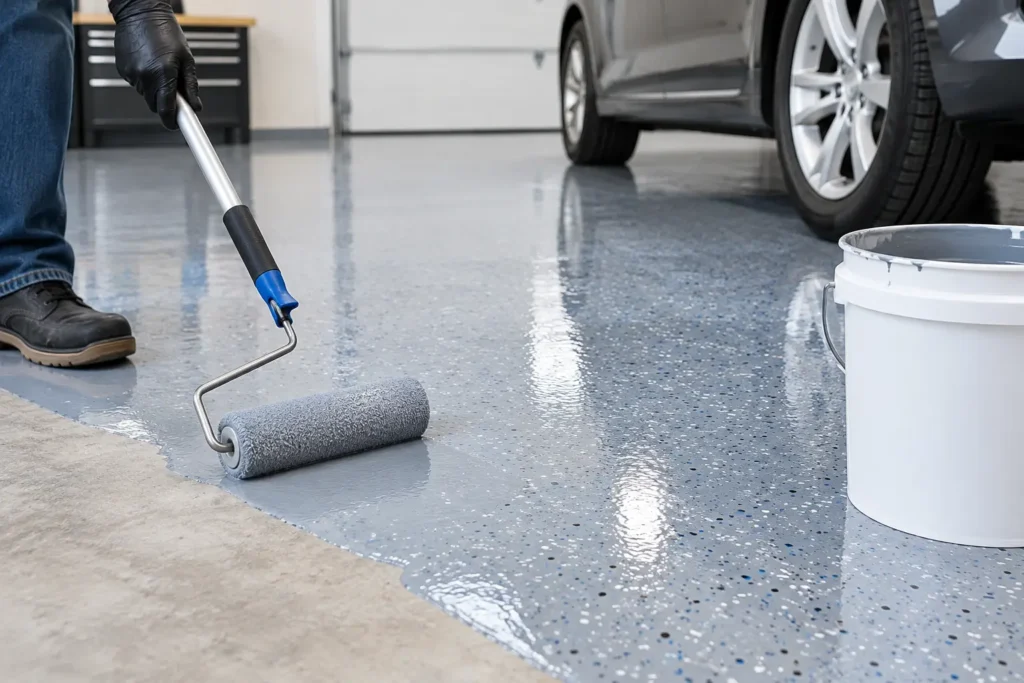
1. Choose an Epoxy Coating Designed for Garage Use
Not every epoxy product is formulated to handle the demands of a working garage. Before choosing a coating, check whether the manufacturer specifies suitability for vehicle traffic and resistance to hot tire pickup.
When choosing epoxy flooring for a garage, consider how well the system can handle parked vehicles, shifting temperatures, and the demands of everyday activity without losing its finish or strength. Ask about the complete coating system rather than judging a product by its appearance alone. A glossy finish may look impressive, but performance depends on the materials and how they are installed.
If you are exploring different finishes for your space, garage flake flooring offers a decorative option to consider when planning a durable, functional space.
2. Prepare the Concrete Surface Properly
A strong bond starts beneath the coating. Dust, oil, grease, moisture, and remnants of an old finish can interfere with adhesion, increasing the risk of peeling when tires place stress on the surface.
For an epoxy coating for garage floors to adhere properly, the concrete needs thorough cleaning and preparation that matches the coating manufacturer’s specifications. Removing surface contaminants through concrete grinding also creates the texture needed for the epoxy coating to adhere firmly to the floor. Any cracks or other concrete defects should also be assessed and addressed before coating begins.
3. Allow the Coating to Cure Completely
Even if the surface feels dry, the coating may still need time to harden fully. Parking your vehicle before this process is complete can weaken the finish and increase the likelihood of tire-related damage.
Follow the manufacturer’s instructions for curing and vehicle access. The waiting period varies by product and can be affected by temperature, humidity, and installation conditions. Avoid relying on a general rule or the surface’s appearance. Giving the coating the time it needs is one of the simplest ways to prevent hot tire pickup.
4. Consider a Protective Topcoat
A compatible topcoat can add another layer of protection against everyday wear, abrasion, and stains. Depending on the system, it may also improve the floor’s resistance to tire-related damage.
However, adding any clear coat will not automatically solve hot tire pickup. Choose a topcoat that bonds properly with the epoxy beneath it, and make sure both products are intended to withstand the demands of a working garage. Ask the installer about the product’s performance specifications, including its resistance to hot tires, rather than assuming that every protective finish offers the same benefits.
5. Keep Tires and the Garage Floor Clean
Dirt, road grime, and rubber residue can build up where your vehicle is parked. Although these deposits do not always cause coating failure, they can make the floor look worn and may become harder to remove over time.
Sweep the garage regularly to clear away grit and debris. For routine cleaning, use a mild cleaner approved for your floor coating and a soft mop or cloth. If you notice fresh tire marks, address them promptly instead of allowing residue to accumulate. Stick to gentle cleaning products and non-scratch tools to preserve the coating’s sheen and prevent surface wear during routine cleanup.
6. Use Garage Floor Mats in High-Traffic Areas
Placing purpose-built mats beneath your parked vehicle can shield the epoxy surface from direct tire contact and limit rubber residue in frequently used parking spots. They can keep rubber residue, road grime, and other contaminants away from the coated surface.
Choose mats designed for automotive use and suitable for coated concrete. Keep the mats firmly in position, and occasionally move them aside to inspect and clean the floor underneath. Trapped moisture, dirt, or chemicals can affect the floor if mats are left undisturbed for long periods. While mats are not a substitute for a properly installed coating, they can be a useful precaution.
7. Maintain the Floor and Address Problems Early
Regular inspections can help you spot potential issues before they become more extensive. Pay attention to areas beneath the tires, looking for persistent marks, peeling edges, bubbling, or changes in the coating’s appearance.
Clean minor marks using approved methods, but do not scrape or aggressively sand the surface to remove them. If the coating begins to lift, have the area assessed to determine whether it needs repair or recoating. Prompt attention can prevent localized damage from spreading and keep your garage floor in better condition.
Protect Your Epoxy Garage Floor From Hot Tire Pickup
Preventing hot tire pickup on an epoxy garage floor starts with choosing a suitable coating and ensuring it is installed correctly. Proper concrete preparation, adequate curing, and regular maintenance all contribute to a floor that can handle everyday vehicle use. Protective mats and a compatible topcoat can provide additional support, but no single measure replaces a well-designed flooring system.
At Xecutive Epoxy Coatings Specialist, we provide epoxy flooring solutions for residential and commercial properties in Las Vegas. Our services include concrete grinding, moisture-blocking primers, and industrial-grade epoxy and polyaspartic systems designed for demanding conditions.
Contact us today for a free on-site estimate and discuss a coating system suited to your space!
FAQs
1. How to keep tire marks off an epoxy floor?
Keep the floor free of dirt and rubber residue, use a coating designed for garage traffic, and allow it to cure fully before parking. Placing suitable garage floor mats beneath tires can provide extra protection in frequently used parking areas.
2. What is the best coating for protecting my garage floor from hot tires?
Choose a garage floor coating specifically formulated for vehicle traffic and with documented resistance to hot tire pickup. Proper concrete preparation, correct application, and a compatible protective topcoat can further improve the coating’s performance.
3. How long should an epoxy garage floor cure before parking a vehicle?
The waiting period depends on the coating product, temperature, and installation conditions. Always follow the manufacturer’s recommended curing schedule for vehicle traffic rather than relying on when the surface feels dry.
4. Does a topcoat prevent hot tire pickup?
A suitable topcoat can improve surface durability and may help reduce hot tire pickup, depending on the coating system. However, it is not a guaranteed solution. Proper surface preparation, product compatibility, and complete curing remain essential.
5. Are all epoxy garage floor coatings resistant to hot tire pickup?
No. Different coating formulations offer different levels of resistance to heat, tire contact, and vehicle traffic. Before choosing a product, check its performance specifications and ensure the entire flooring system is appropriate for garage use.